Seven Parts, One Machine
A scroll-driven 3D machine, and what it shows about how the pieces of marketing connect.
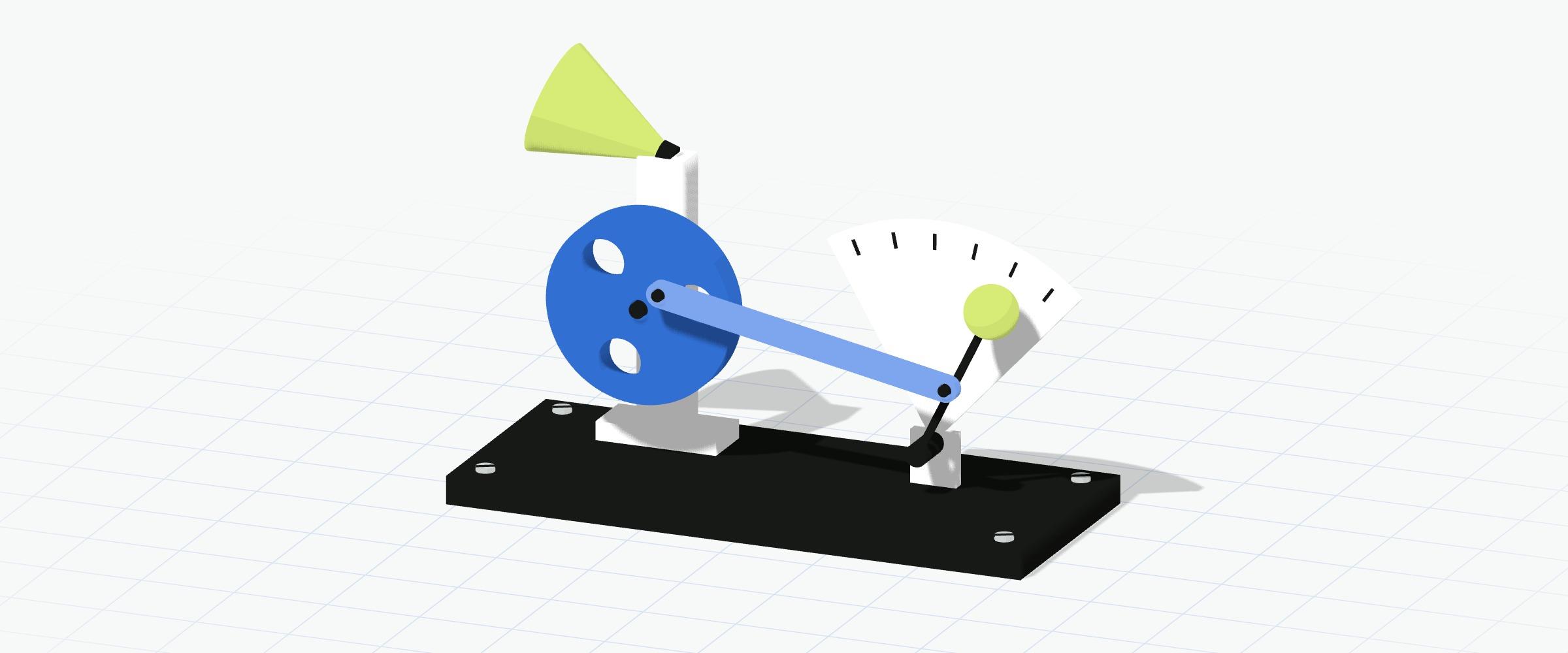
I built a little machine in the browser, and it ended up explaining how I think about marketing better than anything I have written down.
I have worked in marketing since 2013. Over that time I have touched almost every piece of it: strategy, brand, websites, ads, SEO, video, CRM and analytics. Each one gets talked about like it is the whole job. It isn’t.
The interesting part has never been any single piece. It is how they connect. So instead of drawing another diagram, I made the pieces into actual parts and put them together.
Seven parts, one at a time
Scroll slowly. Each part picks up its color and goes onto the plate as you read about it.
Laid out
Seven parts on a grid
Nothing is connected yet. This is what a lot of marketing looks like from the inside. A website over here, an ad account over there, a CRM nobody has opened since it was set up.
01 · Base plate
Strategy
Knowing what you offer, who it is for and why it is different. Nobody notices the plate. Everything else bolts to it, and everything wobbles without it.
02 · Frame
The website
It holds the moving parts. It is where people land, and almost every other part ends up pointing back to it.
03 · Horn
Ads, SEO and content
This is the part people picture when they hear the word marketing. It carries the message out. On its own, it is just noise.
04 · Wheel
Video and motion
Where things start to turn. It shows people how something works instead of describing it. Notice it is already spinning, and nothing else is moving.
05 · Gauge
Analytics
It is supposed to tell you what is happening. Right now the needle is stuck, because nothing is driving it. A gauge with nothing connected reads the same number forever.
06 · Connecting rod
CRM and automation
The part nobody puts on a pitch deck. Now the wheel moves the needle. Leads get followed up, and the numbers on the gauge start meaning something.
07 · Ball
Brand
The part your eye follows. It rides on the end of the needle, which is exactly where people remember you: at the moment something happens.
Running
One motion
Seven parts, and from the outside you only see one thing moving. That is the goal. Drag sideways to look around it.
The part nobody talks about
Watch steps four and five again. The wheel is spinning. The gauge is mounted. And the needle doesn’t move.
That is the most common thing I see. A business has a good video, a decent website, maybe some ads running, and a dashboard full of numbers. Every part is fine on its own. Nothing is driving anything else.
Then the rod goes in, and the same wheel suddenly moves the needle. It is not a better wheel. It is a connected one.
Of course, not every business needs all seven parts built out on day one. A small shop with a clear offer and a phone number can do very well with a plate, a frame and a horn. But once you have more than a couple of parts, my counter is not that you need more of them. It is that you need to connect the ones you have.
Why I built it in 3D
A diagram can show you the parts (there is one under the 3D version, for anyone who has motion turned off). What it can’t show you is what happens when one part moves.
The machine is built with Three.js. The parts are simple shapes, but the linkage is real geometry: a crank and rocker, solved every frame. The needle swings because the rod is pushing it, not because I animated it to look that way. If I made the rod a little shorter, the needle would sweep a different range.
That felt important. The point of the whole thing is that the parts affect each other, so the model had to actually work that way.
It is the same reason I think 3D is where a lot of web design is heading. Some ideas only land once you can watch them move.
Zooming out
Most marketing advice is about parts. Better ads. A faster site. More content. Those are worth doing, and I spend plenty of my time on them.
But when I zoom out, the question I keep coming back to is simpler. When this part moves, what else moves with it?
If the answer is nothing, you don’t have a machine yet. You have a wheel, spinning on its own.
PS: I wrote about building a 3D product demo in 3D Is the Future of Web Design.